
12 August 2026
The Driving Test in Islamabad: What the Examiner Is Watching
Most people who fail the practical test can drive perfectly well. They fail on the same handful of habits. Here is what is actually being marked, and how to practise it.
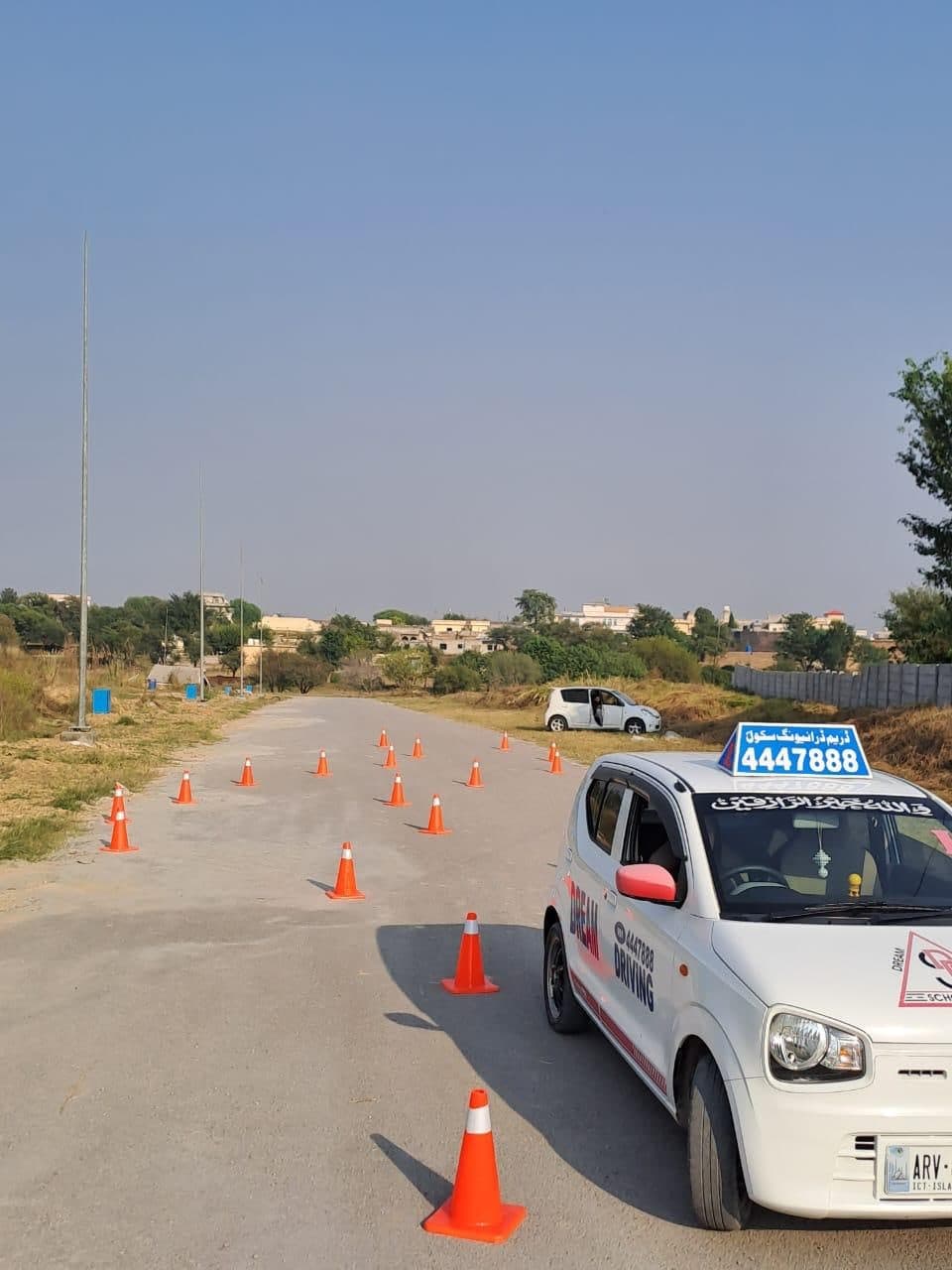
Something we see constantly: a student who drives smoothly for two weeks goes for the test and comes back having failed. Almost never because they cannot drive. Almost always because the test rewards a small set of visible habits, and nobody told them which ones.
Before the driving, there is the sign test
The theory side covers road signs and traffic rules. It is the easiest part to pass and the easiest to be careless about, because it is the only part you can prepare for sitting down. Learn the signs properly — the shapes and colours as much as the pictures, so an unfamiliar sign still tells you whether it is an order, a warning or information.
The manoeuvres
The practical test is taken on a marked track, and the manoeuvres are the part everyone worries about: reversing through an S-shaped path, the L-shape and parking between markers, a controlled stop, and a hill start where the car must not roll backwards. They look intimidating and they are the most learnable part of the whole test, because they are identical every time. This is exactly what practising between cones on open ground is for — by test day the sequence should be boring.
The habits that actually decide it
Watch any group of test candidates and the failures cluster around four things. First, not looking: mirrors before every move, and a proper head turn over the shoulder before pulling out or reversing. An examiner cannot read your mind — if your head does not move, you did not check. Second, rolling back on a slope. Third, speed: too fast reads as reckless, but crawling nervously reads as not in control, and both cost you. Fourth, the clutch — riding it, or stalling at the moment of most pressure.
None of those is a skill exactly. They are habits, which means they can be built in two weeks and cannot be built the night before.
On the day
Bring your learner permit and your CNIC, and confirm the current fee and any other paperwork with the licensing office before you go — those details change and are not worth guessing at. Get there early enough that you are not arriving flustered. Adjust your seat and your mirrors before you move, every time, including on the test: it takes ten seconds and it tells the examiner what kind of driver you are before you have gone anywhere.
And if you do fail, it is not the end of anything. Ask exactly what it was, practise that one thing, and go again. Most people who fail once pass comfortably the second time.